
 By
Hannah Hunt
Published 55 minutes ago
By
Hannah Hunt
Published 55 minutes ago
Back in 2021, Hannah’s love of all things nerdy collided with her passion for writing — and she hasn’t stopped since. She covers pop culture news, writes reviews, and conducts interviews on just about every kind of media imaginable. If she’s not talking about something spooky, she’s talking about gaming, and her favorite moments in anything she’s read, watched, or played are always the scariest ones. For Hannah, nothing beats the thrill of discovering what’s lurking in the shadows or waiting around the corner for its chance to go bump in the night. Once described as “strictly for the sickos,” she considers it the highest of compliments.
Sign in to your Collider account Add Us On Summary Generate a summary of this story follow Follow followed Followed Like Like Thread Log in Here is a fact-based summary of the story contents: Try something different: Show me the facts Explain it like I’m 5 Give me a lighthearted recapWhen most people think of animated films from the mid-2000s, they picture bright colors, family audiences, or quirky indie experimentation. But in 2006, Renaissance arrived like a shadow across the screen, providing a monochrome sci-fi noir that looked, sounded, and felt like none of its peers. Directed by Christian Volckman, this French-produced, English-language animated thriller stars Daniel Craig as a hard-edged cop hunting for a missing scientist in a corporate-controlled Paris. Its defining trait isn’t just its dystopian story but its radical look: stark black-and-white motion-capture animation that turns the city into a maze of light and darkness. Nearly twenty years later, Renaissance remains one of the boldest experiments in adult animation.
A World of Blinding Whites and Endless Blacks
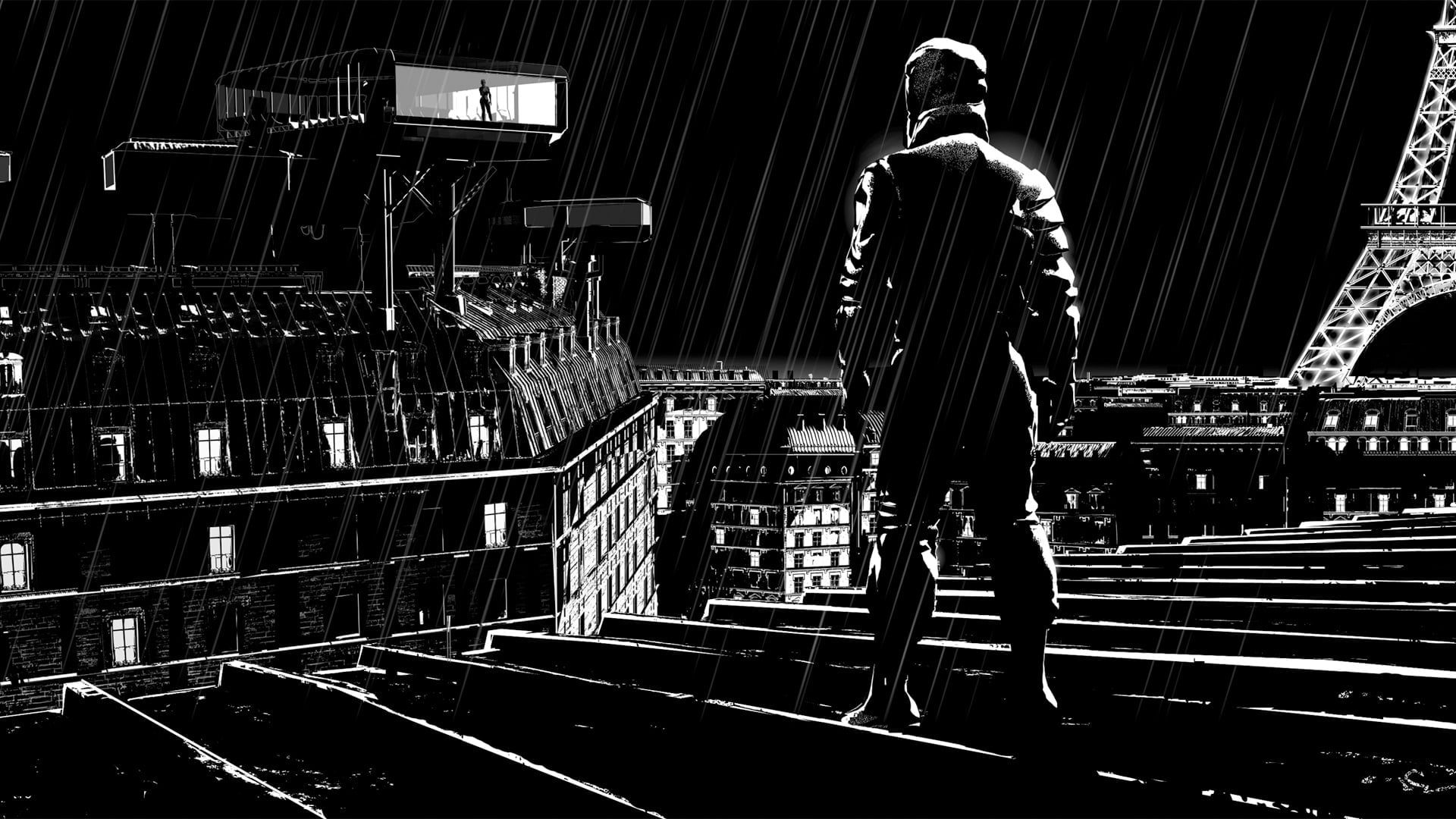
The first thing anyone notices about Renaissance is its uncompromising visual identity. Where most animated films rely on color to build mood, this one strips it away completely. Buildings are rendered in harsh, angular lines, faces are shadowed by silhouette, neon signage cuts through shadow like a blade, and the result is every frame becoming a visual battle between light and dark. This aesthetic is inseparable from the story’s world. Set in futuristic Paris, where megacorporation Avalon controls everything from medicine to surveillance, the city itself is designed to feel like a trap. Glass and steel skyscrapers vanish into shadow, and the camera moves through narrow, oppressive spaces. The visual language mirrors the characters’ lack of agency: identity is reduced to data points, and people disappear as easily as light fades to black.
The visual boldness of Renaissance came at a time when mainstream animation was dominated by colorful spectacles — think Cars, Ice Age: The Meltdown, and Happy Feet. Compared to its competitors, Renaissance felt entirely different. It wasn’t trying to dazzle families or win over children; it was asking adults to confront something colder, sharper, and more deliberate. In doing so, it joined a small but significant wave of animation pushing the medium into new territory, alongside works like A Scanner Darkly and Paprika. But unlike those films, which embraced color and fluidity, Renaissance doubled down on stark simplicity, resulting in an aesthetic closer to noir comics like Sin City than traditional animation.
Motion Capture Meets Noir Storytelling
The production of Renaissance is as striking as its aesthetic. Volckman and his team built the film on the backbone of full-body motion capture technology, a process still finding its footing in the mid-2000s. While The Polar Express used mocap to simulate realism, Renaissance pushed in the opposite direction. After capturing the performances, the filmmakers applied high-contrast rendering that reduced actors’ faces to masks and turned movement into crisp silhouettes. This approach creates a sense of uncanny immediacy. Characters move like real people, but they don’t look entirely real. Craig’s Detective Barthélémy Karas strides through the city like a figure carved from ink, a man who belongs to this world and yet seems ghostly within it. That in-between quality fits the noir genre perfectly. Noir thrives on figures who live in the margins: private eyes, criminals, informants, women who might be dangerous, men who might be doomed. Motion capture lends that liminal feeling a physicality. Every gesture, every chase, and every gunfight carries weight.
The story itself is noir to the bone. A young scientist tied to Avalon vanishes, and Karas is pulled into a case that spirals into a conspiracy. There are double-crosses, shadowy figures, moral compromises, and a mystery that reveals more about power than any individual crime. It’s classic noir reimagined for a corporate surveillance future — a world where moral clarity has been replaced by security systems and profit margins.
A Detective Made of Shadows
 A screencapture from 'Renaissance.'Image via Pathé Distribution
Casting Craig in 2006 was a coup. This was the year he first stepped into the iconic role of James Bond in Casino Royale, but in Renaissance, he plays a very different kind of agent. His character, Karas, isn’t suave or invincible; he’s worn down, mistrustful, moving through the story like a man who knows he’s already lost something. Craig’s performance adds grit to a character who might otherwise be just a silhouette. Voice acting in such a stylized film is crucial. With faces rendered in minimal detail, the weight of emotion lives in tone and delivery. Craig leans into noir tradition: clipped sentences, quiet menace, exhaustion filling every line. His Karas is neither hero nor villain but a function of the machine, a man trying to hold onto scraps of humanity in a city that treats people like barcodes.
Surrounding him is a strong ensemble that includes Catherine McCormack and Jonathan Pryce, each lending their voices to characters shaped by the system they inhabit. But it’s Craig’s presence that anchors the story. His detective is the last flickering human shadow against an unfeeling corporate monolith. Without his voice, the film’s aesthetic might have felt like an experiment. With him, it becomes a narrative.
'Renaissance Is a Forgotten Trailblazer for Adult Animation
 A screencapture from 'Renaissance.'Image via Pathé Distribution
Looking back, Renaissance was ahead of its time. It didn’t make a major box office impact, and it never achieved the cult status of contemporaries like Paprika or A Scanner Darkly. But its DNA is visible in the modern resurgence of adult animation that embraces experimentation. Shows and films now regularly use the medium for grim, layered storytelling. Renaissance helped open that door, even if few noticed it at the time. Its refusal to be approachable is part of what makes it enduring. Where other animated films ease audiences in with humor or color, Renaissance confronts them with absence. There’s no warmth or softness, only a city of light and shadow, asking if humanity can survive in a future built by corporations that strip it away.
The film’s visual minimalism also predicted the appetite for bold stylistic swings. Today, projects like Spider-Man: Across the Spider-Verse, Arcane, and Love, Death & Robots are celebrated for their artistic risk-taking. Renaissance took that kind of risk at a time when adult animation was largely niche. It showed that animation doesn’t have to have charm to matter — it can unsettle, provoke, and linger like smoke in a noir alley. For viewers who think animation is defined by its softness, Renaissance is a blade cutting through the illusion. It’s a reminder that animation can be cold and sharp, and that sometimes, the most daring art happens in the shadows.
Renaissance is available to rent or buy on VOD services in the U.S.

Renaissance
Like Follow Followed TP Action Animation Science Fiction Release Date March 16, 2006 Runtime 105 minutes Director Christian Volckman Writers Alexandre de La Patellière, Matthieu Delaporte, Jean-Bernard Pouy Producers Alexis Vonarb, Aton Soumache, Roch LenerCast
-
 Patrick Floersheim
Barthélémy Karas
Patrick Floersheim
Barthélémy Karas
-
Virginie Mery
Bislane Tasuiev
-
Laura Blanc
Paul Dellenbach
-
Gabriel Le Doze
Jonas Muller (voice)
 Expand
Collapse
Expand
Collapse
-
 Renaissance
-
 Daniel Craig
What To Watch
 July 20, 2025
The 72 Best Movies on Netflix Right Now
Trending Now
July 20, 2025
The 72 Best Movies on Netflix Right Now
Trending Now
 Stephen King's Supernatural Small-Town Series Is Finally Available To Watch for Free 10 Years Later
 The 10 Greatest Quotes in Pixar Movies, Ranked
 The 50 Best Thriller Movies of All Time, Ranked According to IMDb

