
- Home
- Retirement
- Retirement Planning
Can financial advisers who earn commissions on product sales give clients the best advice? For one professional, the answer is clear. Here, he explains why he changed track.
 By
David Bromelkamp
published
4 February 2026
in Features
By
David Bromelkamp
published
4 February 2026
in Features
When you purchase through links on our site, we may earn an affiliate commission. Here’s how it works.
- Copy link
- X
Profit and prosper with the best of Kiplinger's advice on investing, taxes, retirement, personal finance and much more. Delivered daily. Enter your email in the box and click Sign Me Up.
Contact me with news and offers from other Future brands Receive email from us on behalf of our trusted partners or sponsors By submitting your information you agree to the Terms & Conditions and Privacy Policy and are aged 16 or over.You are now subscribed
Your newsletter sign-up was successful
Want to add more newsletters?

Delivered daily
Kiplinger Today
Profit and prosper with the best of Kiplinger's advice on investing, taxes, retirement, personal finance and much more delivered daily. Smart money moves start here.
Signup +
Sent five days a week
Kiplinger A Step Ahead
Get practical help to make better financial decisions in your everyday life, from spending to savings on top deals.
Signup +
Delivered daily
Kiplinger Closing Bell
Get today's biggest financial and investing headlines delivered to your inbox every day the U.S. stock market is open.
Signup +
Sent twice a week
Kiplinger Adviser Intel
Financial pros across the country share best practices and fresh tactics to preserve and grow your wealth.
Signup +
Delivered weekly
Kiplinger Tax Tips
Trim your federal and state tax bills with practical tax-planning and tax-cutting strategies.
Signup +
Sent twice a week
Kiplinger Retirement Tips
Your twice-a-week guide to planning and enjoying a financially secure and richly rewarding retirement
Signup +
Sent bimonthly.
Kiplinger Adviser Angle
Insights for advisers, wealth managers and other financial professionals.
Signup +
Sent twice a week
Kiplinger Investing Weekly
Your twice-a-week roundup of promising stocks, funds, companies and industries you should consider, ones you should avoid, and why.
Signup +
Sent weekly for six weeks
Kiplinger Invest for Retirement
Your step-by-step six-part series on how to invest for retirement, from devising a successful strategy to exactly which investments to choose.
Signup + An account already exists for this email address, please log in. Subscribe to our newsletter

When people ask me why I'm such a strong advocate for fee-only financial planning, my answer is simple: I've seen the entire financial advice ecosystem from the inside — how it works when financial adviser incentives are aligned with the client and how it breaks down when they're not.
My perspective wasn't formed overnight. It evolved over more than four decades, beginning long before "fiduciary" became a household word and well before fee-only advice was widely understood or accepted.
Learning to see the whole financial picture
I began my career in 1982 as an accountant, earning my Certified Public Accountant (CPA) license and working in public accounting throughout the 1980s. That experience shaped how I think about money to this day.
From just $107.88 $24.99 for Kiplinger Personal Finance
Become a smarter, better informed investor. Subscribe from just $107.88 $24.99, plus get up to 4 Special Issues
CLICK FOR FREE ISSUE
Sign up for Kiplinger’s Free Newsletters
Profit and prosper with the best of expert advice on investing, taxes, retirement, personal finance and more - straight to your e-mail.
Profit and prosper with the best of expert advice - straight to your e-mail.
Sign upAccounting forces you to see the entire financial picture — income, expenses, taxes, balance sheets and long-term sustainability.
Even then, it was clear to me that investment decisions could not be separated from tax planning, cash flow, estate planning or risk management. Financial decisions were interconnected, whether the financial services industry acknowledged it or not.
About Adviser Intel
The author of this article is a participant in Kiplinger's Adviser Intel program, a curated network of trusted financial professionals who share expert insights on wealth building and preservation. Contributors, including fiduciary financial planners, wealth managers, CEOs and attorneys, provide actionable advice about retirement planning, estate planning, tax strategies and more. Experts are invited to contribute and do not pay to be included, so you can trust their advice is honest and valuable.
Entering the brokerage world — and recognizing its limitations
In 1988, I transitioned into the investment securities business as a registered representative at a traditional brokerage firm. Like many financial advisers of that era, I was compensated by commissions tied to product sales.
It didn't take long for me to recognize the structural problem: Financial adviser compensation was driven by transactions, not outcomes. Advice was often framed around what could be sold rather than what truly served a client's long-term interests.
At about the same time, the early 1990s were a period of rapid intellectual change in finance.
Discovering diversification — and evidence-based investing
In the early 1990s, I began studying the Nobel-winning research of Harry Markowitz, William Sharpe and others who demonstrated that diversification by asset class, not individual security selection, was the primary driver of long-term investment outcomes.
This research fundamentally changed my approach. I moved away from stock picking and market timing and toward professionally managed portfolios, disciplined asset allocation and long-term investment strategy. Evidence — not sales narratives — became the foundation of my investment philosophy.
From commissions to fees — and from products to planning
As the 1990s progressed, I made another important shift: Transitioning from commission-based compensation to fee-based advisory accounts. This reduced some conflicts, but it didn't eliminate them.
More importantly, my focus increasingly moved beyond investments altogether. Clients didn't just need portfolios — they needed comprehensive financial planning. Retirement planning, tax strategy, insurance analysis, charitable giving and estate coordination were far more impactful than any single investment decision.
By the late 1990s, personal financial planning — not product distribution — had become the core of my work.
Studying fiduciary duty — and acting on it
In the early 2000s, I began studying fiduciary law and best practices for investment decision-making more deeply. The legal and ethical framework was clear: A fiduciary must place the client's interests first, fully disclose conflicts, and seek the best available solutions, not merely suitable ones.
That realization led to a defining decision.
In 2005, I left the investment securities brokerage firm environment entirely to establish Allodium Investment Consultants, an independent, fee-only registered investment advisory firm. No commissions. No product sales. No conflicted compensation. Advice only.
It was a commitment to align structure, compensation and culture with client interests — fully and transparently.
From adviser to advocate: Creating AdvisorSmart
After decades in the financial planning profession, I saw another problem emerge: Consumers had no practical way to evaluate financial advisers. Titles were confusing. Marketing language was misleading. "Fiduciary" was being used inconsistently, and compensation conflicts were often hidden in plain sight.
Looking for expert tips to grow and preserve your wealth? Sign up for Adviser Intel, our free, twice-weekly newsletter.
That gap led me to create AdvisorSmart, a consulting and education firm designed to help consumers learn how to select financial professionals — with a clear bias toward fee-only financial planners.
I spent eight years interviewing experts, studying industry practices, and translating complex regulatory and compensation structures into plain English. The result was my book, AdvisorSmart for the Individual Investor, and the accompanying AdvisorSmart online course.
The AdvisorSmart goal is simple: Empower investors to ask better questions, recognize conflicts of interest and understand why comprehensive fee-only financial planning offers a clearer path to objective advice.
Why fee-only matters
After nearly four decades in financial services, my conclusion is straightforward: How a financial adviser is paid matters.
The fee-only financial planning compensation model removes product-based incentives, supports objectivity, and encourages advice that is integrated across investments, taxes, retirement, estate planning and risk management. It doesn't guarantee perfect advice — but it creates the conditions for better advice.
That's why I continue to advocate for fee-only financial planning — not as a slogan, but as a structural solution rooted in experience, evidence and fiduciary principles.
Related Content
- Overpaying for Financial Advice? A Financial Planner's Guide to Fees
- The Financial Fiduciary Standard Explained
- 11 Questions to Ask When Choosing a Fiduciary Adviser
- Separating the Pros From the Pretenders: This Is How to Tell if You Have a Great Adviser
- The Fiduciary Firewall: An Expert's Five-Step Guide to Honest Financial Planning
This article was written by and presents the views of our contributing adviser, not the Kiplinger editorial staff. You can check adviser records with the SEC or with FINRA.
TOPICS Adviser Intel Get Kiplinger Today newsletter — freeContact me with news and offers from other Future brandsReceive email from us on behalf of our trusted partners or sponsorsBy submitting your information you agree to the Terms & Conditions and Privacy Policy and are aged 16 or over.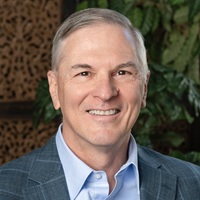 David BromelkampSocial Links NavigationFounder, AdvisorSmart
David Bromelkamp is an investor advocate and the founder of AdvisorSmart®, which was established in 2018 to provide investors with the education they need to access better financial advice. Sometimes referred to as the "Jerry Maguire of Financial Advice," he is passionate about objective financial advice and is leading the charge to educate investors about the best approach to finding and retaining objective, fee-only fiduciary financial advisors. His first book, AdvisorSmart for the Individual Investor: Your Guide to Selecting a Financial Advisor to Get Better Financial Advice, was released in April 2025 to arm consumers with the knowledge they need to succeed.
Latest-
 Nasdaq Slides 1.4% on Big Tech Questions: Stock Market Today
Palantir Technologies proves at least one publicly traded company can spend a lot of money on AI and make a lot of money on AI.
-
 Should You Do Your Own Taxes This Year or Hire a Pro?
Taxes Doing your own taxes isn’t easy, and hiring a tax pro isn’t cheap. Here’s a guide to help you figure out whether to tackle the job on your own or hire a professional.
-
 Trump $10B IRS Lawsuit Hits an Already Chaotic 2026 Tax Season
Tax Law A new Trump lawsuit and warnings from a tax-industry watchdog point to an IRS under strain, just as millions of taxpayers begin filing their 2025 returns.
-
Nasdaq Slides 1.4% on Big Tech Questions: Stock Market Today
Palantir Technologies proves at least one publicly traded company can spend a lot of money on AI and make a lot of money on AI.
-
Should You Do Your Own Taxes This Year or Hire a Pro?
Taxes Doing your own taxes isn’t easy, and hiring a tax pro isn’t cheap. Here’s a guide to help you figure out whether to tackle the job on your own or hire a professional.
-
 Quiz: Are You Ready for the 2026 401(k) Catch-Up Shakeup?
Quiz If you are 50 or older and a high earner, these new catch-up rules fundamentally change how your "extra" retirement savings are taxed and reported.
-
 I Met With 100-Plus Advisers to Develop This Road Map for Adopting AI
For financial advisers eager to embrace AI but unsure where to start, this road map will help you integrate the right tools and safeguards into your work.
-
 The Referral Revolution: How to Grow Your Business With Trust
You can attract ideal clients by focusing on value and leveraging your current relationships to create a referral-based practice.
-
 This Is How You Can Land a Job You'll Love
"Work How You Are Wired" leads job seekers on a journey of self-discovery that could help them snag the job of their dreams.
-
 Fed Vibes Lift Stocks, Dow Up 515 Points: Stock Market Today
Incoming economic data, including the January jobs report, has been delayed again by another federal government shutdown.
-
 65 or Older? Cut Your Tax Bill Before the Clock Runs Out
Thanks to the OBBBA, you may be able to trim your tax bill by as much as $14,000. But you'll need to act soon, as not all of the provisions are permanent.