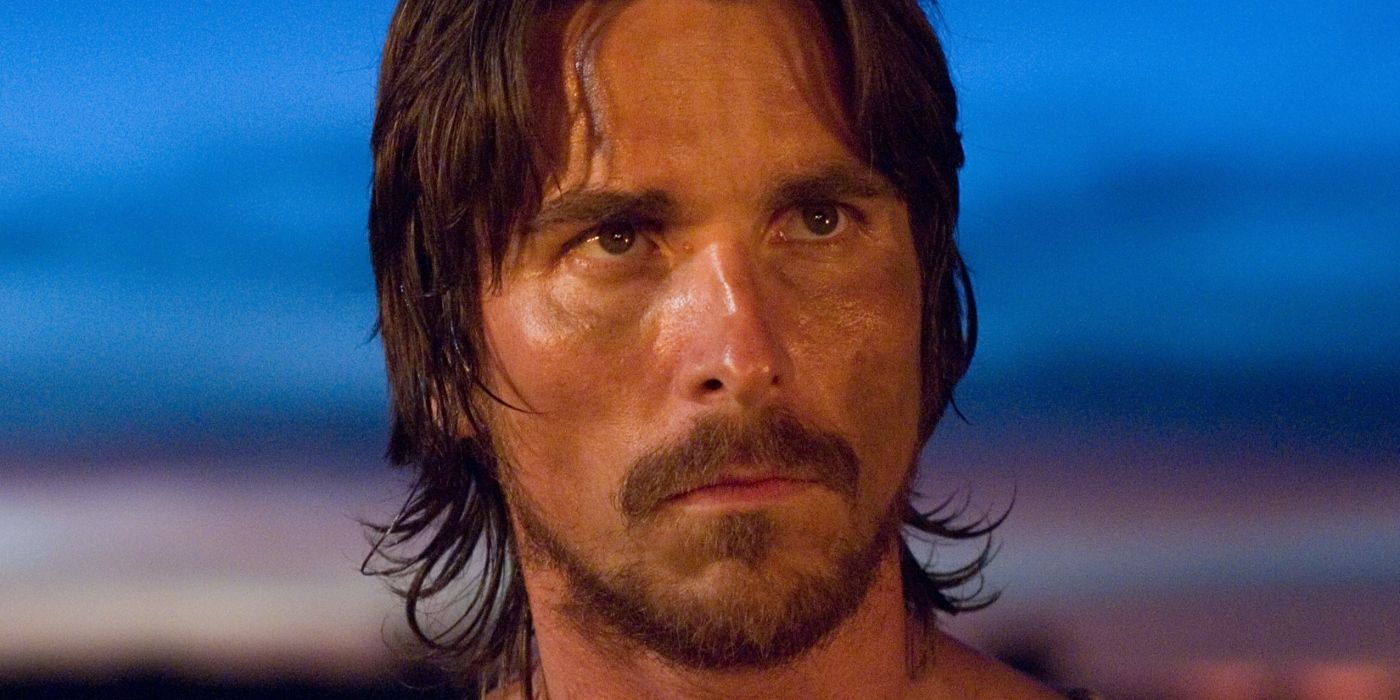
 Christian Bale's Dan Evans looking stern in 3:10 to YumaImage via Lionsgate
 By
Zach Laws
Published Feb 3, 2026, 8:18 PM EST
Zach Laws is a longtime entertainment journalist and movie features writer. He is also an independent filmmaker and member of the Screen Actors Guild based out of Los Angeles.
Zach grew up watching Turner Classic Movies and obsessively following the Oscar race. As a budding cinephile, he used the AFI Top 100 lists, Roger Ebert's Great Movies books, and the Criterion Collection as a helpful guide for what to rent from the video store. He finds endless pleasure learning about the history of world cinema, and loves discovering something new to watch. He also knows way too much about the Academy Awards, and can name every Best Picture nominee from any given year (a useful party trick).
Sign in to your Collider account
Add Us On
follow
Follow
followed
Followed
Like
Like
Thread
Log in
Here is a fact-based summary of the story contents:
Try something different:
Show me the facts
Explain it like I’m 5
Give me a lighthearted recap
By
Zach Laws
Published Feb 3, 2026, 8:18 PM EST
Zach Laws is a longtime entertainment journalist and movie features writer. He is also an independent filmmaker and member of the Screen Actors Guild based out of Los Angeles.
Zach grew up watching Turner Classic Movies and obsessively following the Oscar race. As a budding cinephile, he used the AFI Top 100 lists, Roger Ebert's Great Movies books, and the Criterion Collection as a helpful guide for what to rent from the video store. He finds endless pleasure learning about the history of world cinema, and loves discovering something new to watch. He also knows way too much about the Academy Awards, and can name every Best Picture nominee from any given year (a useful party trick).
Sign in to your Collider account
Add Us On
follow
Follow
followed
Followed
Like
Like
Thread
Log in
Here is a fact-based summary of the story contents:
Try something different:
Show me the facts
Explain it like I’m 5
Give me a lighthearted recap
Perhaps no other director working today has done more to keep the Western alive than James Mangold. Although he's hopped from genre to genre throughout his career, the spirit of the Western is present in films as varied as Cop Land, Walk the Line, and Logan. So it's surprising that he's only directed one proper cowboy movie: 2007's 3:10 to Yuma, a remake of a 1957 adventure yarn adapted from a short story by Elmore Leonard. It seems appropriate that Mangold would remake a movie from the '50s, considering his life's mission seems to be infusing Old Hollywood classicism with New Hollywood sensibilities. And with 3:10 to Yuma, he found the perfect vehicle to express the themes that have been ever-present in his work. The film recently left Netflix, and is now streaming once again on Peacock.
James Mangold's '3:10 to Yuma' Goes Deeper and Darker Than the Original
The plot of 3:10 to Yuma is a model of simplicity: wounded Civil War veteran Dan Evans (Christian Bale) is struggling to keep his ranch from being sold to the railroad company that wants to use his land for development. Desperate for cash, he agrees to help transport outlaw Ben Wade (Russell Crowe) to the town of Contention, where he will take the 3:10 train to Yuma to await trial. A battle of wills ensues as Ben tries to escape by playing mind games with Dan. Meanwhile, Ben's gang, led by the bloodthirsty Charlie Prince (Ben Foster), is headed towards Contention to free their boss.
The 1957 original, directed by genre master Delmer Daves, starred Glenn Ford as the outlaw and Van Heflin as the rancher. At a brisk 92 minutes, it's a tense, psychologically complex B-movie that seems to play out almost in real time in its second half (much like another Western from that era, High Noon). Mangold's version, which adds an extra half hour to the runtime, takes the bones of Leonard's story and expands it into a more ambitious action spectacle, extending the journey to Contention, creating some rich supporting characters (including Dallas Roberts and Alan Tudyk as members of Dan's posse) and taking full advantage of the R-rating to show the gruesome reality of the Old West. He also develops the role of Dan's eldest son, William (Logan Lerman), who loathes his father and accompanies him on the mission because he doesn't think the old man is capable of handling Ben on his own.
 Related
As a Western Fan, These Are the 10 Movies in the Genre I Rewatch the Most
Related
As a Western Fan, These Are the 10 Movies in the Genre I Rewatch the Most
Yee-haw!
Posts 37 By Michael John PettyThere are a number of bravura set pieces, from Ben and his gang robbing the stagecoach transporting the railroad's money (with Peter Fonda as the Pinkerton agent paid to protect it) to the finale, as Dan evades dozens of gunslingers recruited to stop him from getting Ben aboard the train. But what's most surprising about this remake is how rich and complex the relationship between Dan and Ben is. Even though they're on opposite sides of the law, the two live by a moral code. Ben might be a thief, but he's stealing from the railroad company who are using illegal tactics to force Dan off his land. Dan, meanwhile, could very easily save his ranch by taking Ben's stolen money in exchange for letting him escape, but that would be wrong. In the end, there's mutual respect between the two, as they've each come to respect the other's strict sense of ethics. The performances by Crowe and Bale — a significant upgrade over Ford and Heflin in terms of movie star charisma — help sell this as each plays into the ways in which either man could be considered the hero or villain of the story. (It also helps that Foster is so good at playing a brutal henchman, making his boss seem tame by comparison.)
Ben Foster Gives an Underrated, Rock-Star Performance
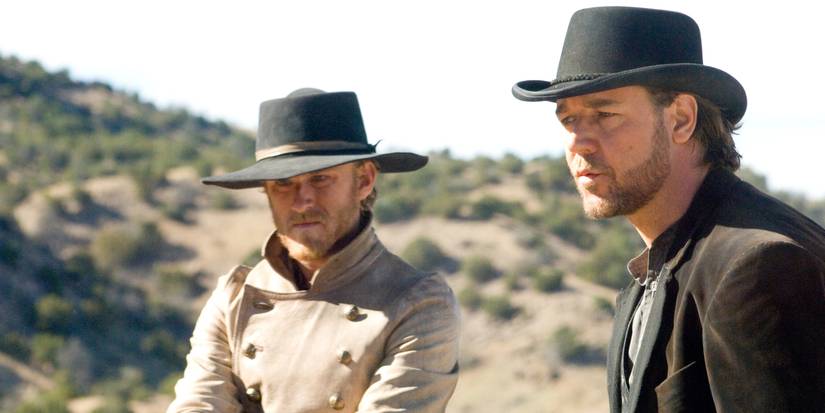 Image via Lionsgate
When speaking to Vulture about his role in 3:10 to Yuma, Ben Foster provided some behind-the-scenes color to the story about his character’s tan leather jacket. He and the wardrobe designer were looking at photos of historical outlaws, and they concluded that the outlaws were the rock-stars of their era. Thus, in a bleached tan jacket with shiny brass buttons, worn by a character named Charlie Prince, was born the regal and deranged inspiration for his performance.
Foster’s character building provides another insight into the rough-and-tumble outlaw world Mangold is exploring in the remake. The flamboyance that he brings to the role can be seen especially in moments of violence. In a scene where the outlaw attempts to get his boss back from the townsfolk assisting with this custody, Charlie gleefully rides through the main square shouting: “This town’s gonna burn.” The rock-star arrogance he brings to the role again comes out when Charlie introduces himself to the Pinkerton agent they are about to rob, drawling “I assume you’ve heard of me?”
An especially poignant moment is the final gun fight that ensues when rancher Dan is trying to escape through town as the team of outlaws awaits them. As Dan leads Ben down a back alley, the surrounding gunmen are alerted, and the trigger-happy outlaws begin shooting wildly in their direction. Foster’s performance as he realizes the danger his boss is in plays across his features as he shouts wildly for the surrounding gunslingers to aim for the rancher and “not the black hat.” As his words have no effect, he springs into action and rapidly takes down the nearby gunmen. It’s a masterful moment where the idea of “black hat vs. white hat” morality is ambiguous as Charlie suddenly enters the fray and momentarily saves Dan from the other outlaws, but only in the hopes that he can kill him himself while freeing his boss.
Foster told Vulture that on each new set an actor needs to “learn how to act again,” as you become open to embodying this new person. He paraphrased Neil Young’s famous quip that songwriters need to “get out of the way” of the song to describe this entry into a new character, saying he wants only to get out of the character’s way. With his performance in 3:10 to Yuma, Foster clearly got out of Charlie’s way and the film was all the better for it.
'3:10 to Yuma' Is James Mangold at His Very Best
Although his filmography encompasses titles like Girl, Interrupted and Kate & Leopold, Mangold has always been drawn to stories centered on men standing apart from society, using a variety of genres to explore issues of masculinity, male bonding, and individuality. Perhaps no other film of his has better expressed these themes than 3:10 to Yuma, which centers on two loners with distinctive views on manhood who eventually come to respect each other. While he would explore similar terrain in his 2019 racing drama Ford v. Ferrari, 3:10 to Yuma is even more effective because it belongs to a genre that has always lent itself to interrogations of male archetypes.
CL Report: Subscribe and never miss what matters
Dive into the world of entertainment with Collider, delivering the latest news, reviews, and exclusive updates from movies, TV, and pop culture Subscribe By subscribing, you agree to receive newsletter and marketing emails, and accept our Terms of Use and Privacy Policy. You can unsubscribe anytime.One of the dramatic threads in 3:10 to Yuma is Dan's struggles to earn William's respect. Having lost his foot in the war and unable to provide for his family, Dan feels constantly emasculated, and his son reinforces this by sneering at his attempts to prove himself. Throughout their trip to Contention, William is put in the middle of Ben and Dan's warring views on masculinity — tough and violent on the one hand, quiet and noble on the other. As the journey progresses, and the rest of the crew are either killed or scared away, Dan's mission to get Ben on the 3:10 train has less to do with the money and more to do with regaining his self-respect. By the end, through watching his father, William has learned what it means to be a man, and so has Ben.
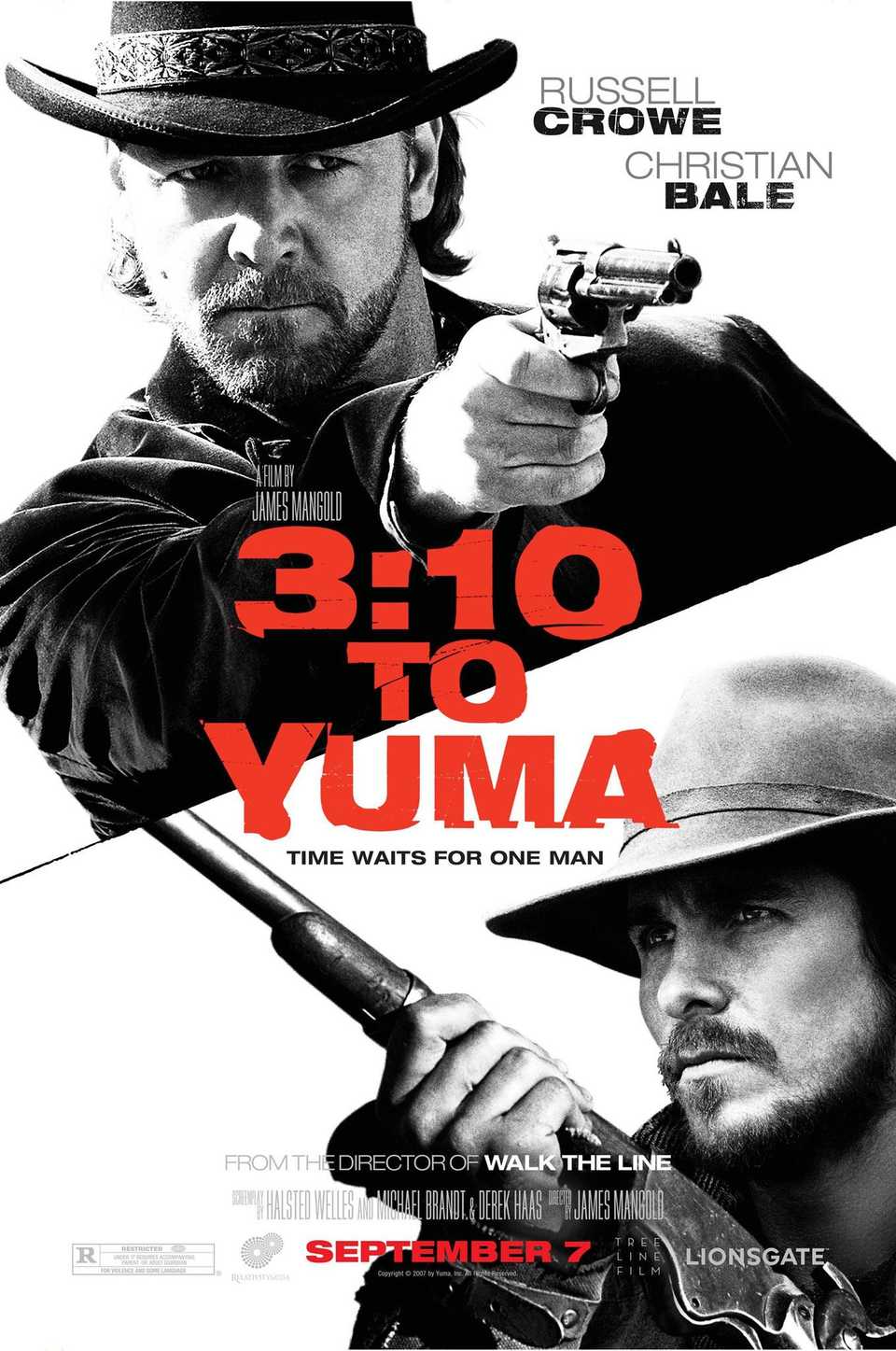
3:10 to Yuma
Like Follow Followed R Adventure Crime Drama Western Release Date September 6, 2007 Runtime 122 minutes Director James Mangold Writers Halsted Welles, Michael Brandt, Derek Haas, Elmore LeonardCast
See All-
 Russell Crowe
-
 Christian Bale
A small-time rancher agrees to hold a captured outlaw who's awaiting a train to go to court in Yuma. A battle of wills ensues as the outlaw tries to psych out the rancher.
Powered by Expand
Collapse
Expand
Collapse
-
 3:10 to Yuma
-
 Christian Bale
What To Watch
 July 20, 2025
The 72 Best Movies on Netflix Right Now
Trending Now
July 20, 2025
The 72 Best Movies on Netflix Right Now
Trending Now
 5 Years Later, Ethan Hawke's 98% RT Civil War Western Resurfaces on Streaming
 'Landman's Billy Bob Thornton Explains Why Fans Hate Season 2 of Taylor Sheridan's Oil Drama
 The Best Sci-Fi Reboot of 2025 Passes Major Milestone on Digital