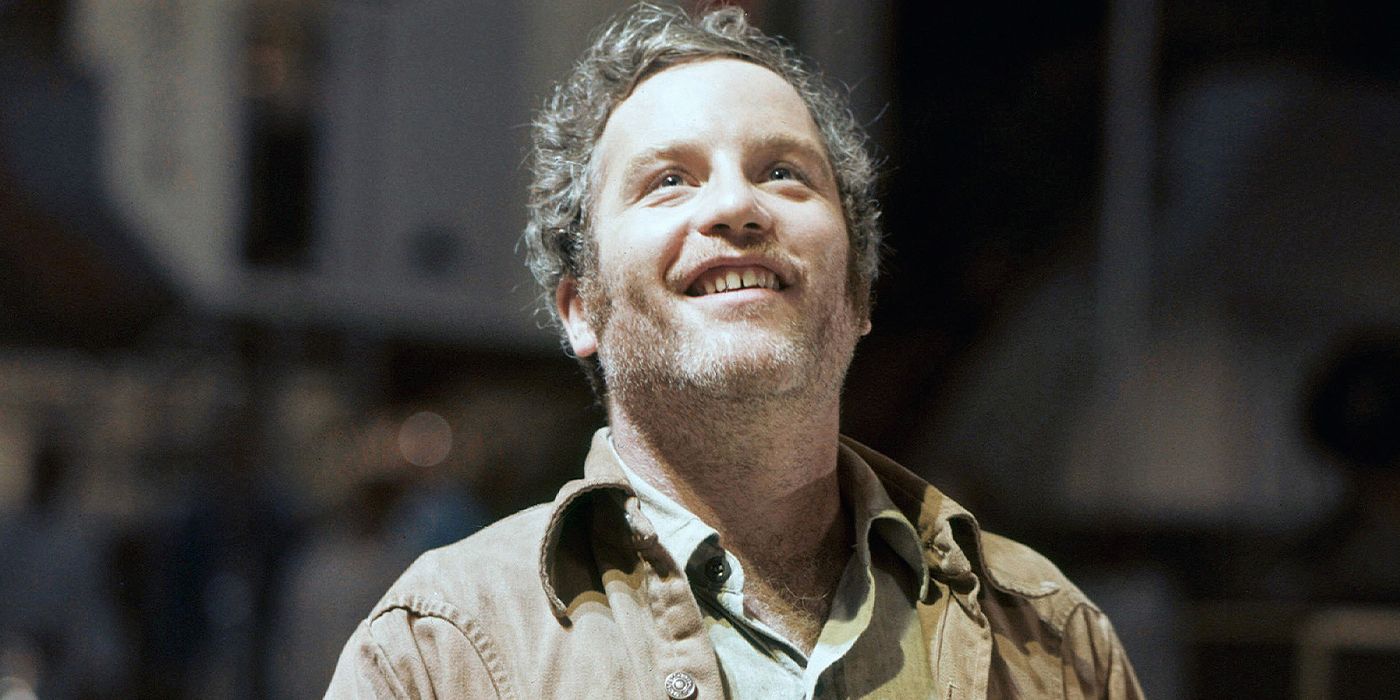
 Richard Dreyfuss' Roy Neary smiling and looking up at the sky in Close Encounters of the ThirdImage via Columbia Pictures
 By
Roger Froilan
Published Feb 2, 2026, 8:20 PM EST
Roger is passionate about movies and TV shows, as well as the drive-in theater. Aside from hosting and producing three podcasts and a monthly live show, he also collects comic books, records, VHS tapes, and classic TV Guides. Currently, he's gotten into restoring cars and enjoys many of the shows on the Motortrend channel.
Sign in to your Collider account
Add Us On
Summary
Generate a summary of this story
follow
Follow
followed
Followed
Like
Like
Thread
Log in
Here is a fact-based summary of the story contents:
Try something different:
Show me the facts
Explain it like I’m 5
Give me a lighthearted recap
By
Roger Froilan
Published Feb 2, 2026, 8:20 PM EST
Roger is passionate about movies and TV shows, as well as the drive-in theater. Aside from hosting and producing three podcasts and a monthly live show, he also collects comic books, records, VHS tapes, and classic TV Guides. Currently, he's gotten into restoring cars and enjoys many of the shows on the Motortrend channel.
Sign in to your Collider account
Add Us On
Summary
Generate a summary of this story
follow
Follow
followed
Followed
Like
Like
Thread
Log in
Here is a fact-based summary of the story contents:
Try something different:
Show me the facts
Explain it like I’m 5
Give me a lighthearted recap
Steven Spielberg's Close Encounters of the Third Kind asks for a kind of faith that later sci-fi took without questioning. It wants you to believe that the lights in the sky mean something generous, and that even when people abandon families, or drive off highways toward nowhere in particular, it’s all in service of a revelation that will justify the damage. That instinct shows up again in Arrival, where communication is bound up with loss and patience, and in some episodes of The X-Files, when Mulder (David Duchovny) keeps believing even as everyone else rolls their eyes. In those stories, contact isn’t treated as a threat so much as a benevolent gesture.
Quatermass has no interest in that reassurance. From the start, contact isn’t a summons or a mystery to decode, but a problem that’s already slipped containment. This is much nearer to The Andromeda Strain than Close Encounters, and it shares DNA with television like Shaun Cassidy's Invasion, where systems unravel without warning. Whatever returns from space isn’t wiser or evolved, just wrong in ways that can’t be undone. Quatermass stays away from awe, but is stuck in checklists and fear.
What Is 'Quatermass' About?
 A man infected in The Quatermass Experiment.Image via BBC
Quatermass started on British television in 1953, when Nigel Kneale’s The Quatermass Experiment went out live on the BBC and immediately treated space travel as something that could go wrong faster than anyone would admit. Hammer Films picked it up a couple of years later with The Quatermass Xperiment, then kept returning to the character in Quatermass 2 and Quatermass and the Pit, continuing the notion that whatever comes back from space brings problems no one’s equipped to clean up.
These stories open with the fallout: A rocket comes back wrong, crew members are missing, and one survivor staggers out alive, and even that turns out to be a temporary condition. From there, the focus stays stubbornly practical. Who’s responsible? Who failed oversight? Who cleans up what space left behind?
 Related
This Overlooked Alien Sci-Fi Miniseries Has One of the Most Uncomfortable Endings Ever
Related
This Overlooked Alien Sci-Fi Miniseries Has One of the Most Uncomfortable Endings Ever
You may not see this ending coming...
Posts By Michael John PettyProfessor Bernard Quatermass (Brian Donlevy) isn’t chasing communion or answers about humanity’s place in the universe. He’s chasing time because his job is to slow the spread, limit exposure, and keep institutions from collapsing under their own optimism. Instead of opening doors here, space exploration punches holes.
In 'Quatermass,' Bodies Are the Battleground
 A man infected in The Quatermass Experiment.Image via BBC
Unlike the clean abstraction of lights in the sky, Quatermass puts the cost of contact inside human bodies. Infection, mutation, absorption. Flesh becomes evidence that something has gone very wrong, and there’s no reversing it once it starts. The fear doesn’t come from what the alien intends, but from watching a human body stop behaving like one — little by little — and it is irreversible.
The camera hangs back just long enough for the dread to take hold and as a person starts drifting out of themselves. The people watching cling to procedure, professionalism, and the hope that staying clinical might still be enough.
Quatermass never blunts the process, and that’s where it drifts away from the more hopeful strains of science fiction. There’s no suggestion that humanity will adapt gracefully. Contact doesn’t expand consciousness, but corrodes it.
'Quatermass' Reminds You To Question Authority
 A masked scientist in Quatermass 2.Image via BBC
One of Quatermass’ sharpest instincts is its distrust of institutions without turning them into cartoon villains. Government officials aren’t evil, and scientists aren’t acting carelessly. They make measured decisions, follow procedure, and still find themselves in grave trouble. Paperwork, jurisdiction, and ego slow things down at exactly the wrong moments. In Quatermass and the Pit (1967), Colonel Breen (Julian Glover) refuses to believe that what he thinks is a leftover German bomb from WWII is actually an alien craft.
Quatermass himself isn’t presented as comforting. He’s direct to the point of discomfort, indifferent to reassurance, and backed only by expertise. That lets him name the threat, but not command the structures that would rather debate than accept failure.
Subscribe for deeper takes on Quatermass and first-contact dread
Explore how Quatermass reframes first-contact as institutional failure and bodily horror—subscribe to the newsletter for more rigorous, theme-driven analysis of Quatermass, similar classic sci-fi, and stories that trade transcendence for dread. Subscribe By subscribing, you agree to receive newsletter and marketing emails, and accept our Terms of Use and Privacy Policy. You can unsubscribe anytime.The result is a kind of procedural dread. You’re watching people argue about responsibility while the clock keeps moving, and the film never pretends that the right call will arrive in time just because someone deserves it.
'Quatermass' Ends on an Eerie Note for 'Sci-Fi' Fans
Where Close Encounters ends with transcendence, Quatermass ends with exhaustion. Problems are solved, but nothing feels fixed. The implication is always that another launch will happen, another mistake will follow, and humanity will keep learning lessons it doesn’t retain.
There’s no victory lap and no sense that curiosity has been redeemed. Quatermass walks away not because he’s satisfied, but because there’s nothing left to say once containment is achieved. That’s why Quatermass is still unsettling. First contact isn’t presented as a moment so much as an aftereffect. Rather than scaring the audience by escalation, it scares by implication, and it never offers the relief of believing that next time will be different.

The Quatermass Experiment
Like Drama Science Fiction Horror Release Date 1953 - 1953-00-00 Network BBC Television Directors Rudolph Cartier Writers Nigel KnealeCast
See All-
 Hugh Kelly
John Paterson
Hugh Kelly
John Paterson
-
Isabel Dean
Judith Carroon
-
Moray Watson
Uncredited
-
Reginald Tate
Professor Bernard Quatermass
 Expand
Collapse
Expand
Collapse
-
 Horror
What To Watch
 July 20, 2025
The 72 Best Movies on Netflix Right Now
Trending Now
July 20, 2025
The 72 Best Movies on Netflix Right Now
Trending Now
 This Epic 10/10 Prime Video Series Is the Best Binge for Sci-Fi and Fantasy Fans
 Markiplier’s Horror Film Debut Takes an Incredibly Boring Descent Into an Ocean of Blood – 'Iron Lung' Review
 Gore Verbinski’s New 134-Minute Sci-Fi Romp May Be a Franchise Starter [Exclusive]