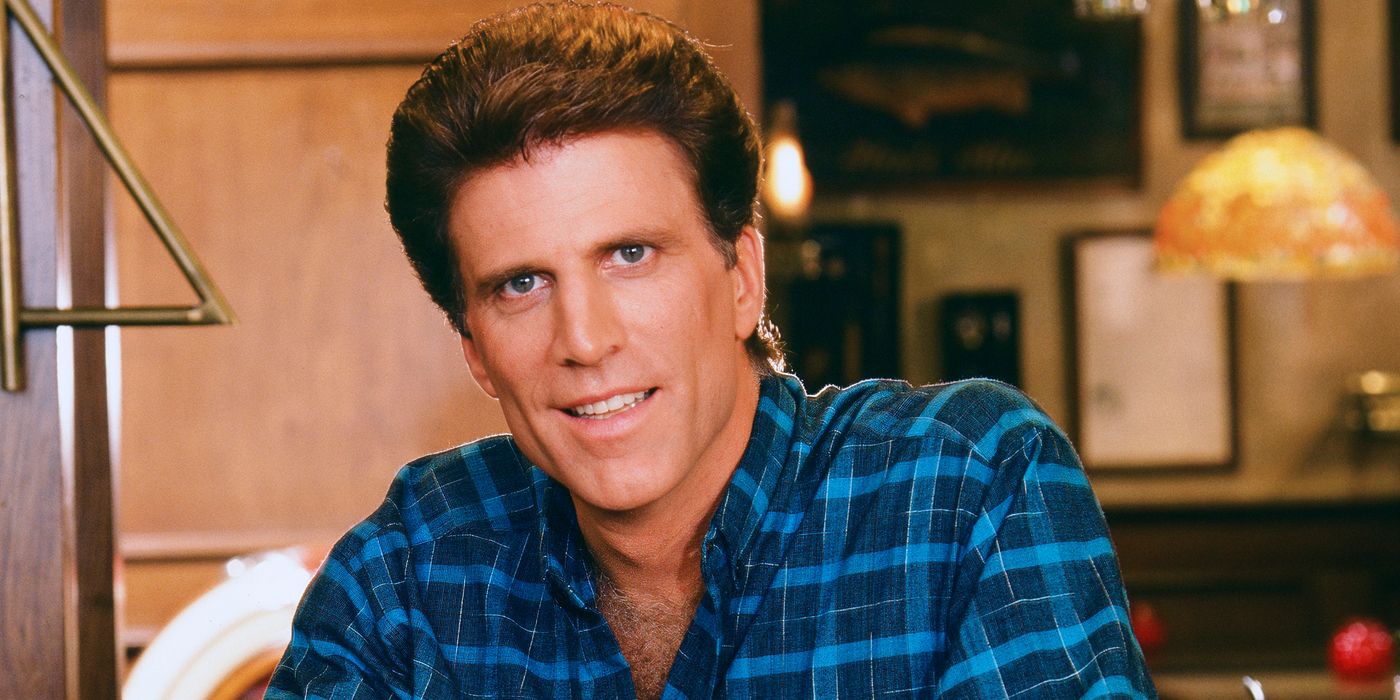
 Ted Danson as Sam Malone standing behind the bar on Cheers.
Image via NBC
Ted Danson as Sam Malone standing behind the bar on Cheers.
Image via NBC
 By
Shawn Van Horn
Published Feb 2, 2026, 8:50 PM EST
Shawn Van Horn is a Senior Author for Collider. He's watched way too many slasher movies over the decades, which makes him an aficionado on all things Halloween and Friday the 13th. Don't ask him to choose between Michael Myers and Jason Voorhees because he can't do it. He grew up in the 90s, when Seinfeld, Everybody Loves Raymond, and TGIF were his life, and still watches them religiously to this day. Larry David is his spirit animal. His love for entertainment spreads to the written word as well. He has written two novels and is neck deep in the querying trenches. He is also a short story maker upper and poet with a dozen publishing credits to his name. He lives in small town Ohio, where he likes to watch professional wrestling and movies.
Sign in to your Collider account
Add Us On
Summary
Generate a summary of this story
follow
Follow
followed
Followed
Like
Like
Thread
Log in
Here is a fact-based summary of the story contents:
Try something different:
Show me the facts
Explain it like I’m 5
Give me a lighthearted recap
By
Shawn Van Horn
Published Feb 2, 2026, 8:50 PM EST
Shawn Van Horn is a Senior Author for Collider. He's watched way too many slasher movies over the decades, which makes him an aficionado on all things Halloween and Friday the 13th. Don't ask him to choose between Michael Myers and Jason Voorhees because he can't do it. He grew up in the 90s, when Seinfeld, Everybody Loves Raymond, and TGIF were his life, and still watches them religiously to this day. Larry David is his spirit animal. His love for entertainment spreads to the written word as well. He has written two novels and is neck deep in the querying trenches. He is also a short story maker upper and poet with a dozen publishing credits to his name. He lives in small town Ohio, where he likes to watch professional wrestling and movies.
Sign in to your Collider account
Add Us On
Summary
Generate a summary of this story
follow
Follow
followed
Followed
Like
Like
Thread
Log in
Here is a fact-based summary of the story contents:
Try something different:
Show me the facts
Explain it like I’m 5
Give me a lighthearted recap
No TV series had as much impact on pop culture in the 1990s as Seinfeld, created by Larry David and Jerry Seinfeld. Over nine seasons, the show dropped countless unforgettable moments and catchphrases, leading to a series finale that is among the most watched non-Super Bowl TV events of all-time. Seinfeld was one of the rare shows that seemed to only get better every year, rather than losing steam, but it wasn't always so easy for NBC's biggest prize. In the early seasons, Seinfeld struggled with audiences and execs, until it hit its stride and turned into a phenomenon.
'Seinfeld' Had an Awkward Beginning
Seinfeld was the brainchild of two stand-up comedians, Jerry Seinfeld and Larry David, and was meant to be loosely based on their lives. Jerry's character had his real name, and George Costanza (Jason Alexander) was so similar to David's personality. The first episode debuted in 1989, and it was far from the series fans would grow to love. It was called The Seinfeld Chronicles; Kramer (Michael Richards) was known as Kessler, and Elaine (Julia Louis-Dreyfus) didn't exist, with a waitress named Claire (Lee Garlington) filling the role of the lone woman.
Those weren't the only differences in the early days of Seinfeld. The tone hadn't gone completely overboard yet. There was no hugging or learning going on, but the episodes weren't over-the-top, and Jerry and Elaine still had a lot of the will-they-won't-they dynamic found in so many other sitcoms. Seinfeld had unrealized potential, and it was getting better, although not everyone understood it. Early in the second season, after the now-classic episode "The Chinese Restaurant", NBC was considering cancelling the series. It was saved by an unlikely source after Rob Reiner, a co-founder of Castle Rock Entertainment, fought for Seinfeld, promising that the stories would get better.
'Seinfeld' Won an Emmy After Its Fourth Season
After a hit-and-miss first two seasons, Seinfeld found its footing in Season 3 thanks to its most iconic storylines. That's when several episodes became unforgettable, such as "The Library," where Jerry is hunted down over a late library book by an ultra-serious library detective named Bookman (Philip Baker Hall). A week later, in "The Parking Garage," it's a half-hour of simply trying to find a lost car, with everything going wrong.
What Seinfeld got right, too, was not solely focusing on one main story. Instead, all four main characters had their own arcs, with them often crossing paths by the end. Jerry Seinfeld may have had his name on the show, but it wasn't only about him. Arguably, he's the least interesting character and would fail without Elaine's annoyance at everything, George's temper tantrums, and Kramer's wild schemes.
 Related
This Season 2 Episode of ‘Seinfeld’ Completely Changed the Show for the Better
Related
This Season 2 Episode of ‘Seinfeld’ Completely Changed the Show for the Better
Jerry shares the laughs with his cast mates in "The Busboy."
Posts By Lloyd FarleyThis resulted in a true Seinfeld breakout in Season 4. At the end of 1992-1993, the sitcom was up to 25 in the rankings at over 12.7 million viewers per episode. Slowly, year after year, the show found its way, and in 1993 it won its one and only Emmy for Outstanding Comedy Series. Suddenly, everyone knew who Seinfeld was.
In Season 6, 'Seinfeld' Became the Number One Show on TV
 Jerry Seinfeld, Jason Alexander, Julia Louis-Dreyfus, and Michael Richards in Seinfeld Image via NBC
A lot of pressure came with such recognition, but it also led so many people to start watching the sitcom. In 1993, as Seinfeld rose, NBC said goodbye to Cheers after 11 seasons. Cheers' perfect Thursday at 9 p.m. time slot now went to Seinfeld. In only two years, the network had gone from nearly cancelling it to recognizing it as the best offering. This created a seismic shift as Seinfeld jumped 22 spots, becoming the third most-watched series at the end of 1994, with an average of 18.3 million viewers. That's a jaw-dropping gain of over 5.5 million people in only one season!
Subscribe to the newsletter for Seinfeld deep dives
Dive deeper into Seinfeld's cultural impact—subscribe to the newsletter for thoughtful analysis, episode breakdowns, and broader pop-culture context. Ideal for readers who want informed perspectives on TV history and trends. Subscribe By subscribing, you agree to receive newsletter and marketing emails, and accept our Terms of Use and Privacy Policy. You can unsubscribe anytime.Seinfeld went from being the cool, sort of underground show to a mainstream giant. For our money, Seinfeld's best season is the fifth. It spent the previous four figuring things out, then daring audiences to reject their audacity. But the exact opposite happened. The awards and increased audience were a silent approval for the show to go for it and do whatever they wanted. Seinfeld did just that. It was silly with "The Puffy Shirt". It pushed boundaries not even all of its stars liked with "The Bris." And it gave viewers the best scene in series history with George's monologue at the end of "The Marine Biologist."
The more awful everyone was, the more popular Seinfeld got. It was the ideal opposite of the predictability we were used to. That sort of comfort could be desired at times, but it couldn't compare to sitting down on Thursday night and wondering just what in the heck the Seinfeld four would do next. After Season 6 in 1995, Seinfeld reached the pinnacle, gaining another 1.3 million viewers and rising to number one in the ratings, with a half million more than the second place ER. George Clooney and company took the top slot the next year, pushing Seinfeld down to number two, yet seven seasons in, it somehow gained 400,000 sets of eyeballs for every episode. After dipping ever so slightly and staying in the second position for Season 8, Seinfeld said goodbye in 1997-1998 by going out on top with 21.2 million people watching every week. Seinfeld took a chance on itself, refusing to conform to sitcom expectations, and in turn, audiences noticed and made it the master of its domain.
 Seinfeld
TV-PG
Comedy
Release Date
1989 - 1998
Powered by
Seinfeld
TV-PG
Comedy
Release Date
1989 - 1998
Powered by
 Expand
Collapse
Expand
Collapse
-
 Seinfeld
-
 Jerry Seinfeld
What To Watch
 July 20, 2025
The 72 Best Movies on Netflix Right Now
Trending Now
July 20, 2025
The 72 Best Movies on Netflix Right Now
Trending Now
 Every Episode of 'Stranger Things 5,' Ranked
 ‘Ponies’ Review: Emilia Clarke and Haley Lu Richardson Deliver a Gripping Spy Thriller With a Perfect Final Shot
 HBO's Criminally Mistreated Sci-Fi Western Series Stages a Comeback